ENT Health

Expert Ear, Nose and Throat News – Now!

Saturday, January 12, 2013

Compact EMG System for Targeted Muscle Injections

No comments

An EMG system (ElectroMyoGraphy) is a critical piece of equipment when it comes to targeted muscle injections in and around the neck, especially when you cannot see or feel the muscle.

This scenario is especially true when dealing with spasmodic dysphonia for which targeted botox injections are quite helpful. Given the muscles that need to be injected are contained inside the voicebox and not able to be seen and felt from outside the neck, accurate injection is quite difficult without EMG guidance.

Watch a video of this procedure using a traditional EMG system.

However, such traditional EMG systems are "overkill" in terms of technology and cost when all it is being used for is muscle placement.

It was with great excitement that a compact EMG device has been developed for just such a need when all that is required is needle localization for directed drug delivery.

Check out the MyoGuide made by Intronix Technologies based in Canada. The US supplier is Ambu.

I've been using MyoGuide for a few months now and am quite pleased with its performance. It pretty much does exactly what I want it to do... no more or less. There is both audio and display feedback, though I mainly depend on audio. It runs only on batteries.

For head and neck muscle injections, I find that a volume setting of 8 and vertical sensitivity of 6 works best.

My personal preference is using Ambu Inoject 35mm 27G needle for ADductor spasmodic dysphonia and the Allergan EMG needle for ABductor spasmodic dysphonia.

For those interested in trying out this device, there is a 2 week free trial.

Friday, January 11, 2013

Parkinson's Disease Diagnosed by Salivary Gland Biopsy

No comments
Taken from Wikipedia
Currently, diagnosing Parkinson's Disease (a degenerative neurological disorder) is hard, usually a clinical exam and assessment of symptoms by a neurologist with at best about an 80% accuracy rate. There is no "test" per se that can diagnose Parkinson's Disease... until possibly now.

According to a study released in advance of its presentation at the annual meeting of the American Academy of Neurology, which will be held from March 16 to 23 in San Diego, Mayo Clinic researchers have determined a submandibular gland biopsy can offer 82% certainty whether a living patient has Parkinson's Disease or not. What is so special about this particular gland located under the jawline?

In patients with Parkinson's Disease, an uniquely abnormal protein called alpha-synuclein protein can be found.

In order to "biopsy" the submandibular gland which produces saliva, it does require a head and neck surgeon given the gland's location under the jawline. Beyond the usual risks of bleeding and infection present with any type of surgery, additional risks with this biopsy include:

• Permanent lip paralysis as the nerve that goes to the lower lip is located right over this gland.
• Permanent tongue paralysis as the nerve that moves the tongue is located right under this gland.
• Permanent numbness of the mouth floor as the nerve that provides sensation in this location is also located right under the gland.

Also, there are questions that need to be answered before this test is available more widely including:

How early in the Parkinson's Disease will this protein accumulate in the submandibular gland? If there is an "accumulation" time period, when is the best time to do the biopsy than?

Does the biopsy require a bloc of tissue or can a needle biopsy be sufficient (thereby reducing some of the surgical risks)?

Will insurance pay for this procedure?

Also, when is the paper going to be published regarding these results and can others replicate these findings? Here's the presentation abstract...

Source:
New saliva gland test may better diagnose patients with Parkinson's. FoxNews 1/11/13

Salivary Gland Biopsy as a Diagnostic Test for Parkinson's Disease. AAN 65th Annual Meeting Abstract

Saturday, December 15, 2012

Voice Amplification for Patients with a Weak Voice

No comments

There are certain voicebox conditions that naturally tends to a weak sounding voice.

For some, the voice is weak all the time sounding breathy or just lacks projection. For others, the voice starts out OK, but than becomes weak after talking for some period of time. There are both pathological (ie, vocal cord paralysis) as well as functional (ie, muscle tension dysphonia) causes of a weak voice, but in the end, a patient just wants a better sounding voice one way or another.

Although voice therapy is a standard way of addressing vocal weakness regardless of causation as well as possible surgical interventions, patients still need to use their voice and in order to obtain an immediately improved vocal strength is to use electronic amplification.

For the same reason a pop star singer uses a microphone to amplify their voice to be heard in a gigantic stadium, a person with a weak voice can use a similar system to amplify their voice in more mundane situations.

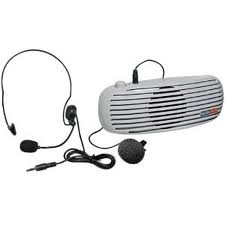
In essence, such personal voice amplification systems contain 2 components: microphone and speaker. The microphone is placed near the mouth and the speaker placed near the person, typically on a belt.
Such systems are relatively cheap costing less than $100. Many models can be found on Amazon.comat a discount.

The "premium" voice amplification systems are by Chattervoxand cost several hundred dollars.

Some examples can be found here.


Thursday, December 13, 2012

Julie Andrews and Her "Botched Throat Surgery"

No comments

It has already been well-publicized that the former singing sensation Julie Andrews underwent some type of throat surgery in 1997 after which she never regained her phenomenal 4-octave voice thus relegating her to more conventional roles of being an actress without the singing. This "botched throat surgery" per Julie Andrews lead to a lawsuit that was ultimately settled.

It is unknown precisely what type of (presumed) vocal cord pathology was present as well as what type of surgical approach was used to try and fix it. In a recent interview, she stated:
"The operation that I had left me without a voice and without a certain piece of my vocal chords"
However, given her aggressive and active singing career prior to surgery, she probably had vocal cord nodules, a benign growth that occurs due to vocal overuse, a situation not uncommon with professional singers.

Vocal cord nodules are most always due to excessive voice use leading to "callous" formation on the vocal cord lining, much like shoveling dirt will eventually lead to callous formation on the hands.

Traditional standard of care management of vocal cord nodules is voice therapy and avoidance of any activities leading to voice abuse (screaming, yelling, etc). However, resolution of nodules with such behavior focused treatment takes months. However, although it takes a while for the nodules to resolve with this treatment method, they typically do not come back.

For patients who are more "impatient" for results (not unusual with professional singers whose livelihoods depend on singing), there are more aggressive ways to address vocal cord nodules with possible resolution within weeks. However, the caveat is if the underlying voice behavior that led to nodule formation in first place is not addressed, the vocal cord nodule WILL recur after initial resolution/improvement. Furthermore, as with any more invasive treatments to obtain a "quick fix", scar formation may occur leading to permanent voice changes, usually for the worse which obviously happened with Julie Andrews.

What are some of these more invasive treatments beyond voice therapy? To reiterate, these procedures also have a high risk of recurrence if underlying abusive voice behavior that led to the nodule formation in first place is not first addressed.

• Surgical excision can be performed, but can lead to permanent scar formation during the healing process that can lead to persistent irreversible hoarseness.

• Botox injection can also be pursued which causes a "partial" vocal cord paralysis preventing the repetitive trauma in the region of the vocal cord nodule.

• Steroid injection to the vocal cord nodule(s) can possibly resolve or reduce the nodule resulting in improved vocal quality within weeks. Such local injection technique has mainly been performed in the treatment of spasmodic dysphonia (botox injection), vocal cord granulomas, and vocal cord paralysis. Watch a video how a "local injection" to the vocal cord can be performed (video shows injection of vocal cord granuloma rather than nodule, but overall approach is identical).

Read more about vocal cord nodules here.

Source:
Julie Andrews' Voice Isn't Coming Back, But She's Not Staying Silent. Huffington Post 12/5/12

PUBLIC LIVES; Julie Andrews Sues Throat Surgeon. NYT 12/15/99

Julie Andrews Settles Lawsuit Against Doctors. ABC News 9/7/12

Monday, December 10, 2012

Coffee Reduces Risk of Death from Oral Cancer

No comments


In a prior blog, I mentioned that researchers found that regular coffee drinkers who drank more than four cups of coffee a day had a 39 percent decreased risk of two types of head and neck cancer: oral cavity and pharynx cancers. In the study published in the Journal of Cancer Epidemiology, Biomarkers & Prevention, they found however, that coffee did not decrease the risk of laryngeal cancer. Read a CNN report on this here.

In a more recent study (Dec 2012), researchers have found that not only does coffee reduce risk of cancer, but that consuming more than four cups of caffeinated coffee per day was associated with a 49 percent lower risk of oral/pharyngeal cancer death relative to no/occasional coffee intake.

Coffee contains over 1,000 different chemical compounds, including cancer-fighting antioxidants, and it’s those antioxidants that may provide a “plausible explanation” for reducing the cancer risk as well as cancer death.

However, patients should not take this study as an excuse to increase their coffee intake specifically to counteract known cancer-causing behaviors including smoking, drinking alcohol, and chewing tobacco.

Reference:
Coffee and Tea Intake and Risk of Head and Neck Cancer: Pooled Analysis in the International Head and Neck Cancer Epidemiology Consortium. Cancer Epidemiol Biomarkers Prev. 2010 Jul;19(7):1723-36. doi: 10.1158/1055-9965.EPI-10-0191. Epub 2010 Jun 22.

Coffee, Tea, and Fatal Oral/Pharyngeal Cancer in a Large Prospective US Cohort. American Journal of Epidemiology, 2012 DOI: 10.1093/aje/kws222

Sunday, December 9, 2012

Embedded Earrings and Treatment

2 comments

A few times a month, I have a patient, usually a young child, who presents with an earring that not only can not be removed, but is embedded within the earlobe (or ear) itself.

There are two common scenarios that lead to this unfortunate situation: infection and fiddling.

Infection is fairly straightforward. For whatever reason, the piercing gets infected and the earlobe skin starts to swell around and eventually even enveloping the earring itself. To prevent an embedded earring, immediately remove the earring!!! If you wait until the swelling is too severe, it may not be possible to remove the earring at all without surgical intervention. This type of infection can occur rapidly from being normal to rip-roaring infected swelling within 24 hours.

Fiddling is basically when the patient keeps tightening the earring backing snug with the skin as tightly as possible so the earring won't loosen and potentially get lost. However, such tightening can actually induce the skin to overgrow the earring with subsequent infection. Always make sure there is some “play” that allows the earring to push back and forth through the ear and turn easily.


Now, should the earring become embedded and manual removal not possible, surgical intervention is required.

The steps are as follows:

1) Sterilize the area with betadine.
2) Inject area with lidocaine.
3) After the area becomes anesthetized, a scalpel is used to create an "X" shaped incision over the embedded earring.
4) Toothed forceps and clamps are used to grab and pull the embedded earring out.

Aftercare typically involves oral antibiotics and application of antibiotic ointment several times a day. Once the infection clears, I typically recommend waiting a few months before re-piercing to allow scar activity to completely fade first.

Also, keep in mind that they DO make earrings that are physically impossible to tighten up against the skin to reduce the possibility of embedded earrings.

On that note, we do offer ear-piercing in our office.

Tuesday, November 27, 2012

Is Patient Abandonment in the Operating Room Ever Justified?

No comments

I ask this question mainly because there WAS an ENT who WAS sued (and settled) for NOT abandoning his patient in the operating room. [link]

Imagine this hypothetical scenario...

You are an ENT surgeon in a rural community hospital performing a fairly difficult but elective sinus surgery on a 12 years old child with cystic fibrosis with extensive pan-sinus nasal polypoid disease. Given the extensive nasal polypoid disease, a fair amount of bleeding is occurring which was not unanticipated.

Suddenly, you get a phone call from the emergency room regarding a patient with progressive difficulty breathing suspected to have epiglottitis.

What do you do if you are the only ENT in the hospital?

Do you "abandon" the 12 years old child in the operating room, still bleeding, still under general anesthesia and attend to the ER patient who himself might die without an emergency tracheostomy? Doing an evaluation to determine how critical the ER patient may take anywhere from 15 - 60 minutes including the tracheostomy itself.

What if you are the only ENT available in the region let alone the hospital? No fellow ENT colleagues to call upon for help. General surgery is "unavailable" or not comfortable with performing tracheostomies especially given ENT performs all tracheostomies in the hospital?

Patient abandonment is defined as:
  • Failing to transfer a patient to an appropriate level of care
  • Failing to respond to calls from a hospital regarding a patient
  • Refusing to care for a patient after arranging the patient's admission
  • Failing to treat a patient until new coverage is arranged
Proving patient abandonment includes:
  • Your doctor had a duty to treat you - a duty was created when the physician-patient relationship was established
  • You had a reasonable expectation that your doctor would treat you
  • Your doctor failed to treat you although he or she was obligated to do so
  • You suffered injury as a result
Well, according to one lawsuit, it seems that the ENT was required to abandon his patient in the operating room and attend to the ER patient. The lawsuit stemmed from the fact that the ENT did not abandon his patient in the operating room and the ER patient did die as a result of not being attended to quickly and a tracheostomy performed. Of course, the settled lawsuit also blamed the hospital, general surgery, and anesthesiology.

However, abandoning a patient on the operating room table is also tantamount to medical malpractice according to the very definition of patient abandonment.

And, I would not be surprised if the patient on the operating room table would have sued the ENT if he DID leave the operating room in the middle of surgery to attend to another patient.

What to do?

I have no answer...

Doing an emergency tracheostomy is HARD, even for someone who has performed hundreds of elective tracheostomies. I know... I've done perhaps a half-dozen emergency trachs in my career so far. In this particular lawsuit, I found it incredible that a hospitalist (not a surgeon) was the one who finally attempted the emergency tracheostomy (albeit unsuccessfully).

Do you consider the patient you are CURRENTLY caring for has a higher priority than a patient you have never met, even if possible life-threatening illness is involved? (Keep in mind that when called for an airway problem, that 99% of the time, an emergency tracheostomy is not needed.)

OR, do you prioritize the patient you have never met given the possible life-and-death circumstances involved, even if 99% of the time, no surgical airway is required.

What would YOU do? What should you do? Feel free to comment below!

Source:
Hospital settles wrongful death lawsuit. Curry Coastal Pilot 10/31/12
Related Posts Plugin for WordPress, Blogger...
 

Other Topics on ENT Health

Corner left
Corner right
Powered by Blogger